01 · Shape
The right shape
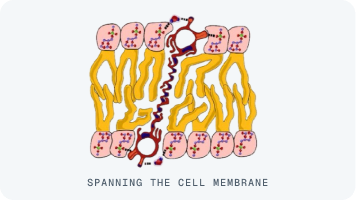
Only the SS all-trans form of astaxanthin can span the cell membrane. Synthetic versions are about 25% that form. Our microalgae make it exclusively.
Science
Every Adjuvia program starts with the same molecule: a uniquely configured form of astaxanthin that brings mitochondrial repair, anti-inflammatory and cell-regenerative activities together.
The molecule
Astaxanthin has been studied for decades, with mixed results. The difference comes down to shape, composition and size. Adjuvia’s form is different on all three.
01 · Shape
Only the SS all-trans form of astaxanthin can span the cell membrane. Synthetic versions are about 25% that form. Our microalgae make it exclusively.
A UNIQUE MIX, IN OUR OWN NANOPARTICLE
02 · Composition
Our process yields a unique combination of astaxanthin molecules in a proprietary lipid nanoparticle.
03 · Size
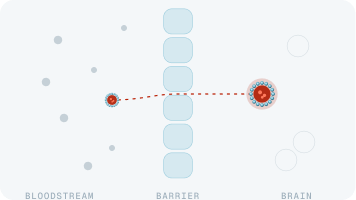
Conventional extraction yields particles too big to be absorbed. Our proprietary lipid nanoparticles reach every organ.
How it’s made
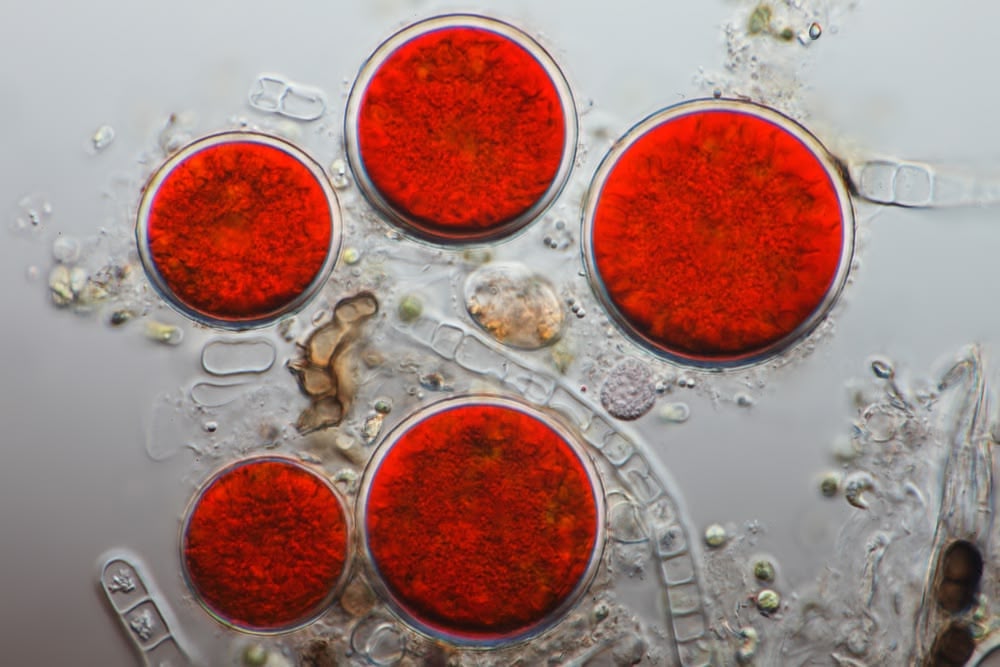
Haematococcus pluvialis. Under stress, it forms a cyst that fills itself with astaxanthin in its active form.
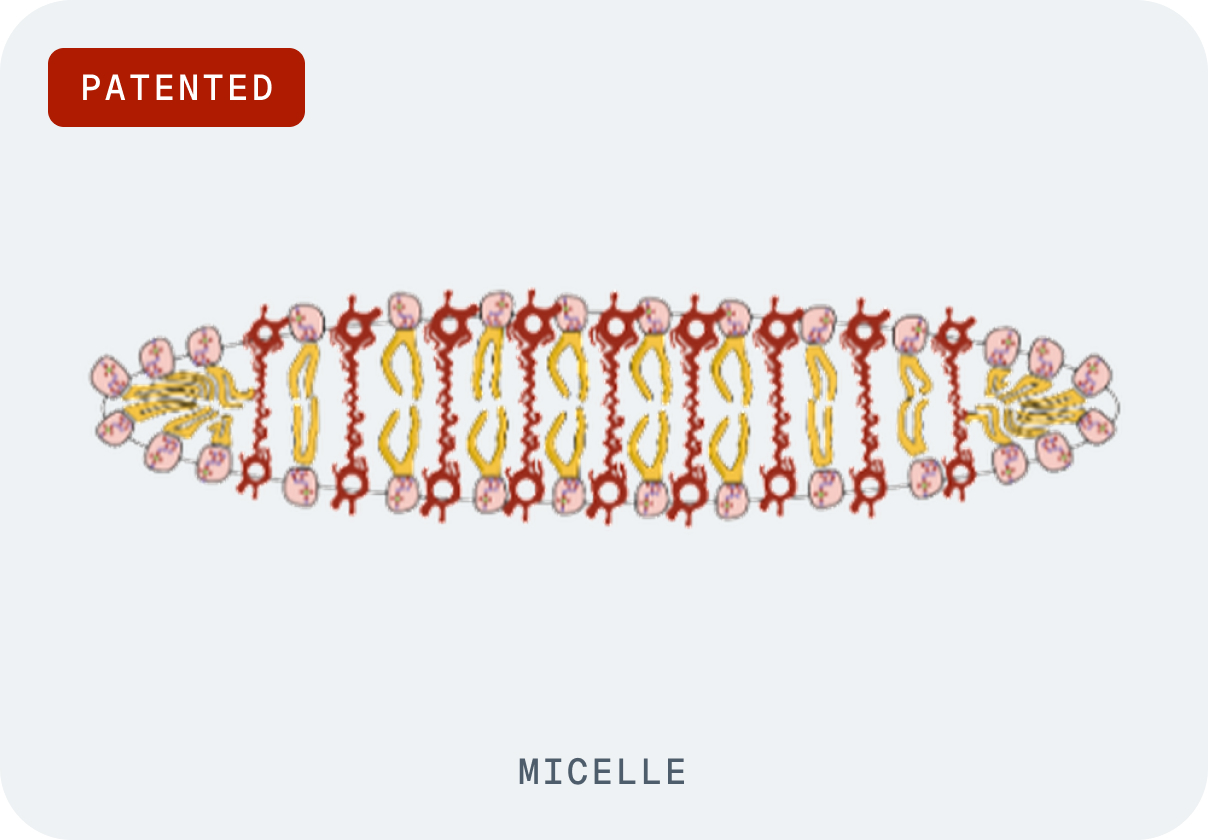
Our patented process uses high shear forces to disassemble the cyst into its smallest constituent parts, preserving the molecule and its natural cofactors.
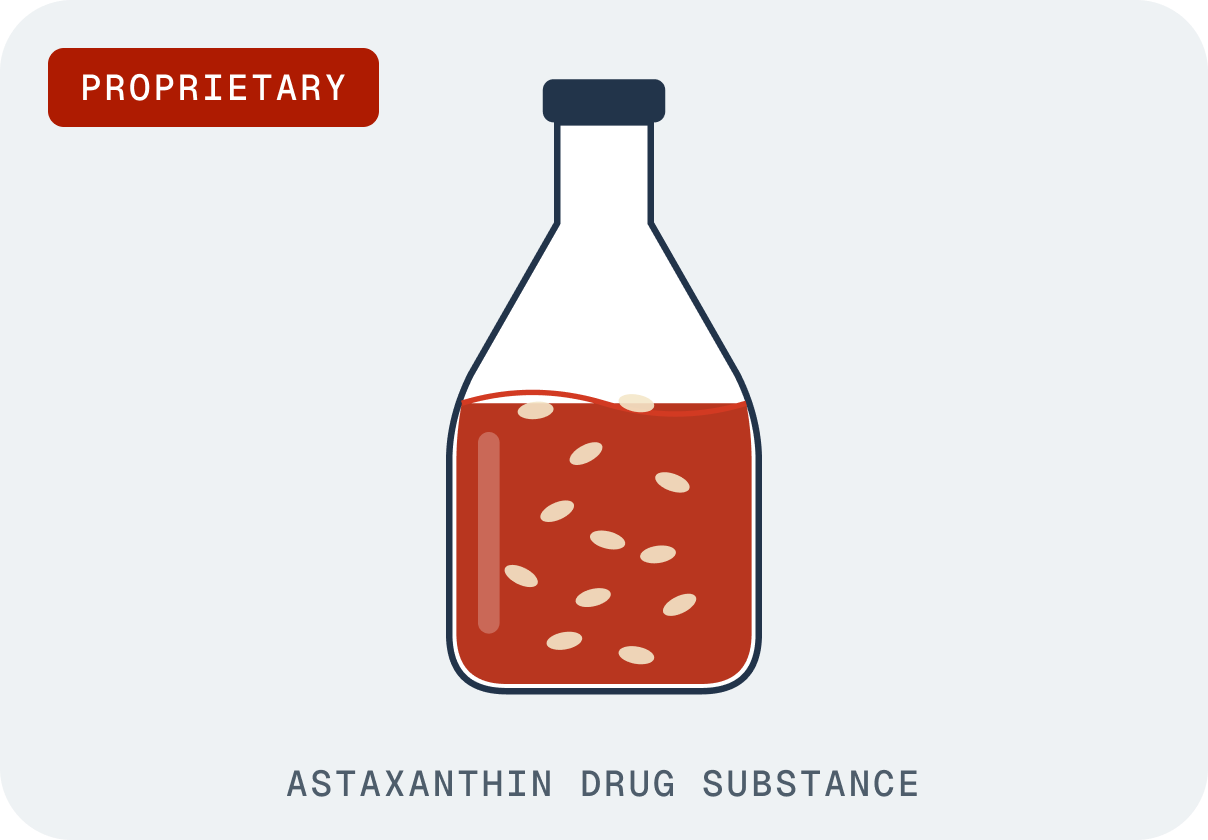
The extract is the astaxanthin nanoparticle suspension the FDA cleared in our IND, and the start of every program.
Step 05 · Formulation
We formulate the drug substance differently for each program, from rare mitochondrial disease to the brain to IVF.
Astaxanthin drug substance
From step 03
ATI-105 · Lead · Phase 1
Formulated as a lipid nanoparticle in an oral capsule
ATI-106 · Partner-ready
Co-formulated with green tea EGCG as a lipid nanoparticle in an oral capsule to carry it into the brain
ATI-107 · Partner-ready
Built into existing commercial lipid nanoparticles to calm harmful inflammation and broaden systemic delivery
ATI-108 · IND-Enabling
Loaded into empty lipid nanoparticles so it dissolves in IVF media.
ATI-105 · Mechanism
Mitochondria power our cells. A defect anywhere along this chain cuts that power, and the brain, heart and other high-energy organs fail first.
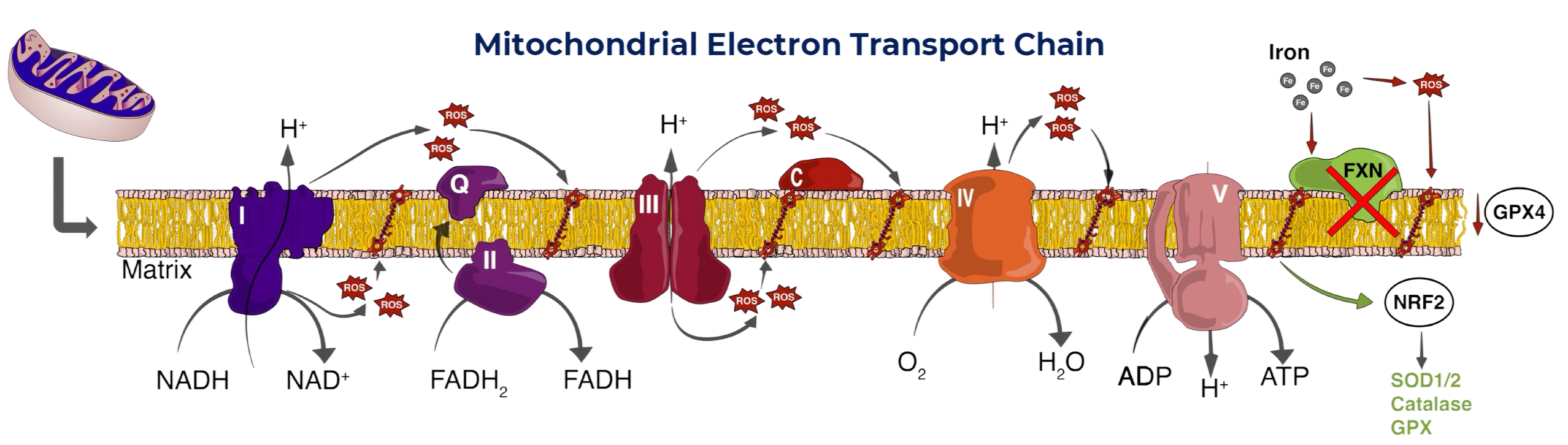
Inherited disorders that disrupt mitochondrial energy production.
Complex I
Planned
Leigh syndrome, FILA, leukoencephalopathy, LHON, MELAS
Complex II
Planned
Hereditary paraganglioma, leukoencephalopathy
Complex III
Planned
GRACILE syndrome, Björnstad syndrome, leukoencephalopathy
Complex IV
Planned
Leigh syndrome, neonatal hepatopathy, fatal neonatal cardiomyopathy
Complex V
Planned
Adult-onset NARP, MILS, MLASA, cerebellar ataxia, motor neuron syndrome
Frataxin (FXN)
Lead · Phase 1
Friedreich’s ataxia
ATI-105 · Preclinical data
Full data packages are available under confidentiality.
Safety to date
Non-GLP tox study in rats: uptake into all organs at all doses tested, with no safety findings. GLP tox studies in rats and dogs: no safety findings.